

A Vet Health Certificate is one of the most important documents a pet owner may need, especially when traveling, relocating, or meeting specific legal requirements. Whether you own a dog, cat, rabbit, or another companion animal, this certificate confirms that your pet has been examined by a licensed veterinarian and is healthy enough for travel or other official purposes.
Many pet owners are unaware of when they need a Veterinary Health Certificate or what information it includes. Understanding the purpose, requirements, and process can help you avoid unnecessary delays and ensure your pet remains safe and compliant with local and international regulations.
This guide explains everything you need to know about obtaining a Pet Health Certificate, including the documents required, examination process, validity period, costs, and frequently asked questions.
What Is a Vet Health Certificate?
A Vet Health Certificate, also known as an Animal Health Certificate or Veterinary Certificate, is an official medical document issued by a licensed veterinarian after performing a thorough veterinary examination.
The certificate confirms that the pet is in good health, free from contagious diseases, has received the necessary pet vaccinations, and meets the travel or legal requirements of the destination country, airline, or local authority.
This document serves as proof that your pet has undergone a recent physical health assessment and is considered fit-to-travel at the time of examination.
Purpose of a Vet Health Certificate
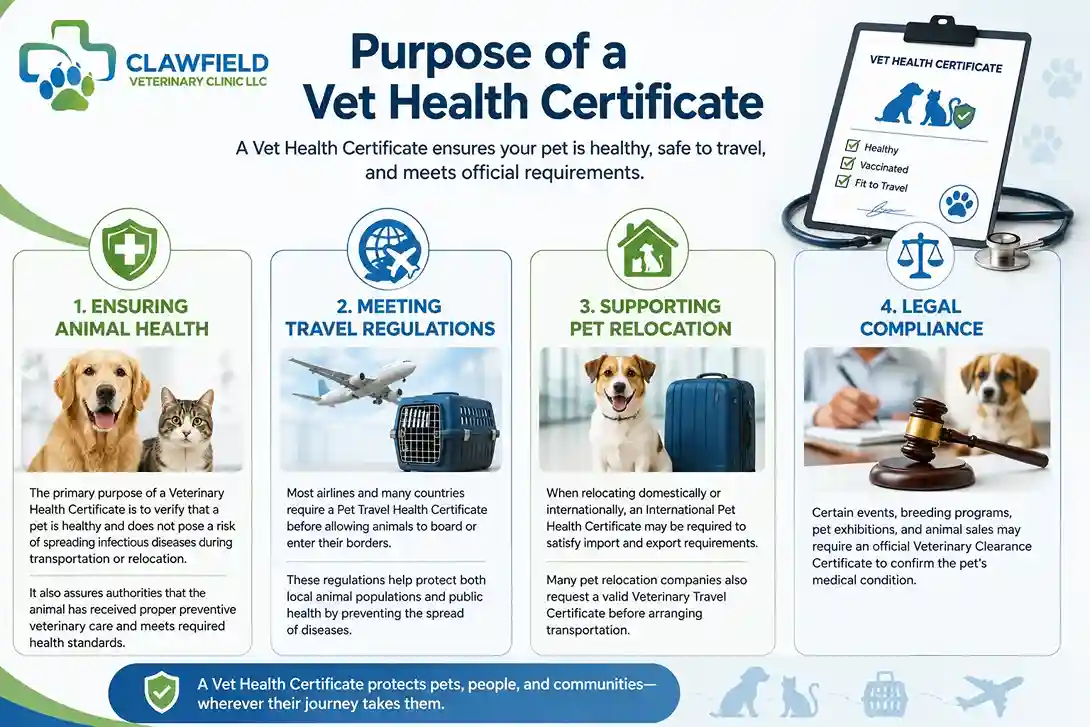
Ensuring Animal Health
The primary purpose of a Veterinary Health Certificate is to verify that a pet is healthy and does not pose a risk of spreading infectious diseases during transportation or relocation.
It also assures authorities that the animal has received proper preventive veterinary care and meets required health standards.
Meeting Travel Regulations
Most airlines and many countries require a Pet Travel Health Certificate before allowing animals to board or enter their borders.
These regulations help protect both local animal populations and public health by preventing the spread of diseases.
Supporting Pet Relocation
When relocating domestically or internationally, an International Pet Health Certificate may be required to satisfy import and export requirements.
Many pet relocation companies also request a valid Veterinary Travel Certificate before arranging transportation.
Legal Compliance
Certain events, breeding programs, pet exhibitions, and animal sales may require an official Veterinary Clearance Certificate to confirm the pet’s medical condition.
Requirements for a Vet Health Certificate
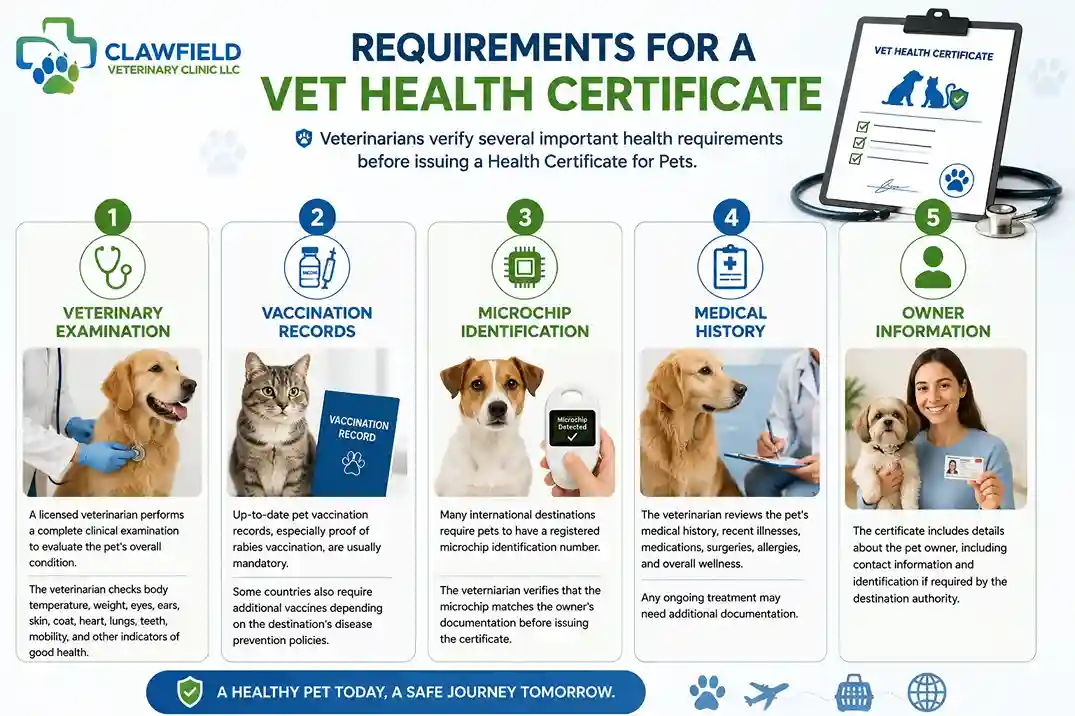
Before issuing a Health Certificate for Pets, veterinarians verify several important health requirements.
Veterinary Examination
A licensed veterinarian performs a complete clinical examination to evaluate the pet’s overall condition.
The veterinarian checks body temperature, weight, eyes, ears, skin, coat, heart, lungs, teeth, mobility, and other indicators of good health.
Vaccination Records
Up-to-date pet vaccination records, especially proof of rabies vaccination, are usually mandatory.
Some countries also require additional vaccines depending on the destination’s disease prevention policies.
Microchip Identification
Many international destinations require pets to have a registered microchip identification number.
The veterinarian verifies that the microchip matches the owner’s documentation before issuing the certificate.
Medical History
The veterinarian reviews the pet’s medical history, recent illnesses, medications, surgeries, allergies, and overall wellness.
Any ongoing treatment may need additional documentation.
Owner Information
The certificate includes details about the pet owner, including contact information and identification if required by the destination authority.
What Is Included in a Vet Health Certificate?
A standard Pet Medical Certificate usually contains detailed information about both the pet and the examination.
The document includes the pet’s species, breed, age, gender, color, weight, and identifying characteristics.
It also records the microchip number, vaccination history, parasite treatments, examination date, veterinarian details, and an official statement confirming the animal is healthy for travel.
Some certificates also contain laboratory test results if required by specific countries.
Step-by-Step Process to Get a Vet Health Certificate
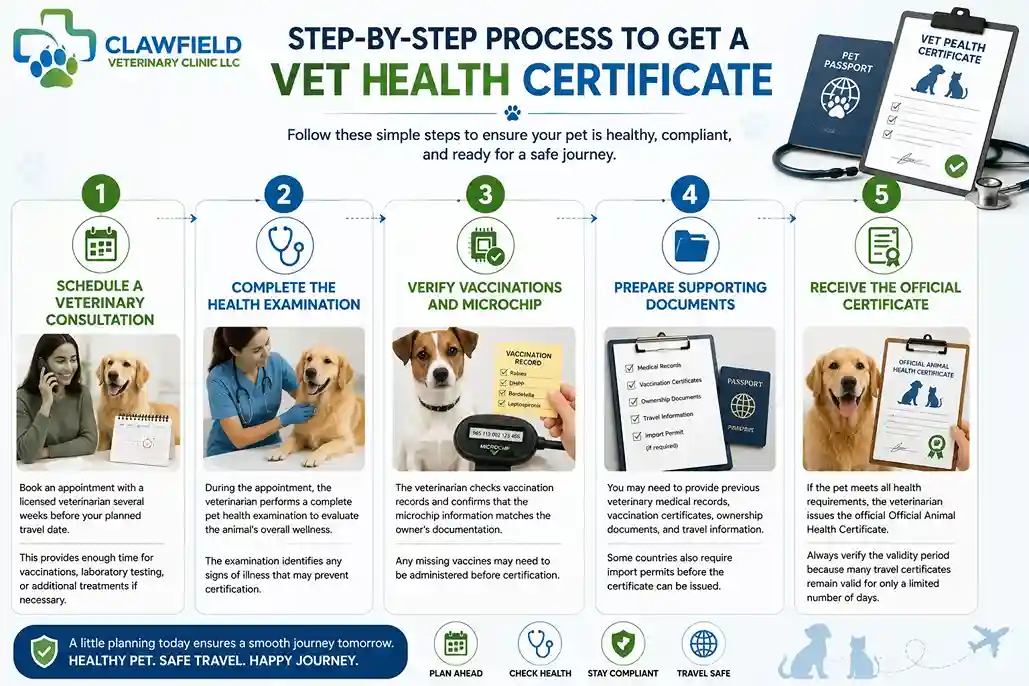
Schedule a Veterinary Consultation
Book an appointment with a licensed veterinarian several weeks before your planned travel date.
This provides enough time for vaccinations, laboratory testing, or additional treatments if necessary.
Complete the Health Examination
During the appointment, the veterinarian performs a complete pet health examination to evaluate the animal’s overall wellness.
The examination identifies any signs of illness that may prevent certification.
Verify Vaccinations and Microchip
The veterinarian checks vaccination records and confirms that the microchip information matches the owner’s documentation.
Any missing vaccines may need to be administered before certification.
Prepare Supporting Documents
You may need to provide previous veterinary medical records, vaccination certificates, ownership documents, and travel information.
Some countries also require import permits before the certificate can be issued.
Receive the Official Certificate
If the pet meets all health requirements, the veterinarian issues the official Official Animal Health Certificate.
Always verify the validity period because many travel certificates remain valid for only a limited number of days.
How Long Is a Vet Health Certificate Valid?
The validity depends on the destination country’s regulations and airline requirements.
For international travel, many certificates remain valid for approximately 7 to 10 days after the examination, while some domestic certificates may be accepted for longer periods.
Always check travel requirements well before departure because regulations frequently change.
Cost of a Vet Health Certificate
The cost varies depending on the country, clinic, and additional services required.
Factors affecting the price include the veterinary consultation, laboratory testing, vaccinations, parasite treatments, government endorsements, and destination-specific documentation.
Although obtaining a certificate involves some expense, it can prevent travel disruptions and ensure compliance with official regulations.
Common Situations That Require a Health Certificate
Many pet owners assume these certificates are only necessary for international travel.
However, they may also be required for domestic airline travel, pet relocation, breeding programs, pet competitions, adoption transfers, and animal exports.
Certain hotels, boarding facilities, and daycare centers may also request proof of a recent veterinary examination.
Why Choosing the Right Veterinary Clinic Matters
Obtaining an accurate health certificate depends on choosing an experienced veterinary team familiar with travel regulations and international documentation.
If you are searching for a trusted pet clinic in Dubai, selecting a facility with experienced veterinarians and modern diagnostic equipment helps ensure that every requirement is completed correctly.
An established vet clinic in Dubai can also guide pet owners through vaccination schedules, microchip registration, travel documentation, and country-specific regulations.
Many pet owners choose Clawfield Veterinary Clinic because it offers comprehensive examinations, preventive care, and assistance with travel documentation through its experienced pet health veterinary clinic team.
Tips for Preparing Your Pet Before the Examination
Schedule the appointment well in advance rather than waiting until the last minute.
Ensure vaccinations are current and keep all medical records organized before visiting the clinic.
If your pet takes regular medication, inform the veterinarian during the consultation.
Maintain your pet’s regular diet, hydration, and exercise routine to help ensure the examination accurately reflects its normal health condition.
Conclusion
A Vet Health Certificate is much more than a travel document. It confirms your pet’s health, supports disease prevention, satisfies legal requirements, and ensures safe transportation for companion animals.
Understanding the purpose, requirements, and process makes obtaining the certificate much easier. Planning ahead, maintaining current vaccinations, and working with an experienced veterinarian will help ensure your pet meets every health requirement before travel or relocation.
Whether you need a Dog Health Certificate, Cat Health Certificate, or an International Pet Travel Certificate, obtaining accurate documentation protects both your pet and the animals they may encounter during their journey.
FAQs
What is a Vet Health Certificate?
A Vet Health Certificate is an official document issued by a licensed veterinarian confirming that a pet is healthy and meets specific travel or legal health requirements.
Who can issue a Veterinary Health Certificate?
Only a licensed veterinarian who performs a complete veterinary examination can issue a valid Veterinary Health Certificate.
Is a Pet Health Certificate required for airline travel?
Many airlines require a Pet Health Certificate, especially for international travel. Some domestic flights may also require one depending on airline policies.
How long is a Vet Health Certificate valid?
Most certificates remain valid for a limited period, often between 7 and 10 days for international travel, although requirements vary by destination.
What documents are needed to obtain a health certificate?
Pet owners generally need vaccination records, microchip information, previous medical records, identification documents, and travel details.
Is a vaccination certificate the same as a health certificate?
No. A vaccination certificate only confirms immunizations, while a Vet Health Certificate verifies the pet’s overall health after a complete veterinary examination.
Does every pet need a microchip?
Many countries require microchip identification for international travel. Even where it is not mandatory, microchipping greatly improves pet identification and recovery.
Can I get a same-day Vet Health Certificate?
Yes, if your pet meets all health requirements and no additional testing or vaccinations are needed, many veterinary clinics can issue the certificate on the same day.