

Exotic pets have become increasingly popular among animal lovers in the UAE. From colorful parrots and reptiles to hedgehogs and rabbits, these unique companions require specialized care that differs significantly from cats and dogs. Understanding their health needs, housing requirements, and the laws governing their ownership is essential for providing a safe and healthy life.
Choosing the right Pet Clinic in Dubai is one of the first steps toward responsible exotic pet ownership. Unlike traditional pets, exotic species often require veterinarians with specialized knowledge, advanced diagnostic equipment, and experience in treating uncommon medical conditions. Regular wellness examinations can help identify hidden illnesses before they become serious.
Finding a trusted Vet Clinic in Dubai is equally important because exotic animals tend to hide signs of illness until their condition becomes advanced. Professional veterinary guidance ensures proper nutrition, disease prevention, habitat management, and routine health monitoring that support a longer, healthier life.
Many new owners also wonder about the Cost of vet clinics in Dubai when caring for exotic animals. Expenses vary depending on the species, diagnostic tests, preventive treatments, and emergency care required. Investing in preventive veterinary visits is often far less expensive than treating advanced diseases.
At Clawfield Veterinary Clinic, experienced veterinary professionals understand that every exotic pet has unique medical and environmental needs. Whether you own a bird, reptile, rabbit, or another exotic companion, personalized veterinary care plays a vital role in maintaining their health and overall well-being.
What Are Exotic Pets?
Exotic pets are animals that are not traditionally domesticated like cats and dogs. They include reptiles, birds, amphibians, small mammals, and certain invertebrates. While many of these animals make fascinating companions, they often require highly specialized care to remain healthy.
Unlike common household pets, exotic species have evolved in unique climates and ecosystems. Their diet, temperature requirements, humidity levels, and social behaviors must closely resemble their natural environment to prevent stress and illness.
Owning an exotic pet is a long-term commitment that requires education, preparation, and access to veterinary professionals familiar with these unique animals.
Common Exotic Pets in Dubai
Dubai is home to a wide variety of legally owned exotic pets. Some species are more suitable for beginners, while others require experienced handlers and specialized facilities.
Popular exotic pets include:
- Rabbits
- Guinea pigs
- Hamsters
- Hedgehogs
- Ferrets
- Parrots
- Cockatiels
- Lovebirds
- Turtles
- Tortoises
- Geckos
- Bearded dragons
- Corn snakes
- Ball pythons
Each species has different environmental, dietary, and medical needs that should be researched thoroughly before adoption.
Understanding UAE Laws for Exotic Pet Ownership
Before purchasing any exotic animal, owners should familiarize themselves with UAE regulations. Wildlife conservation laws are designed to protect endangered species while ensuring responsible ownership.
Certain wild animals are prohibited as pets due to safety concerns and conservation efforts. Protected species may require government permits, registration, or documentation proving legal importation.
Buying animals only from licensed breeders or authorized sellers helps prevent illegal wildlife trade while ensuring healthier pets.
Failure to follow legal requirements may result in fines, confiscation of animals, or additional legal consequences.
Legal Exotic Pets in Dubai
Many exotic species are legal to own provided they are acquired through approved channels.
Generally accepted pets include:
- Domestic rabbits
- Guinea pigs
- Pet birds
- Certain reptiles
- Turtles
- Hedgehogs
- Ferrets
Potential owners should always verify the latest regulations before purchasing any unusual animal because laws may change over time.
Care Requirements for Exotic Pets
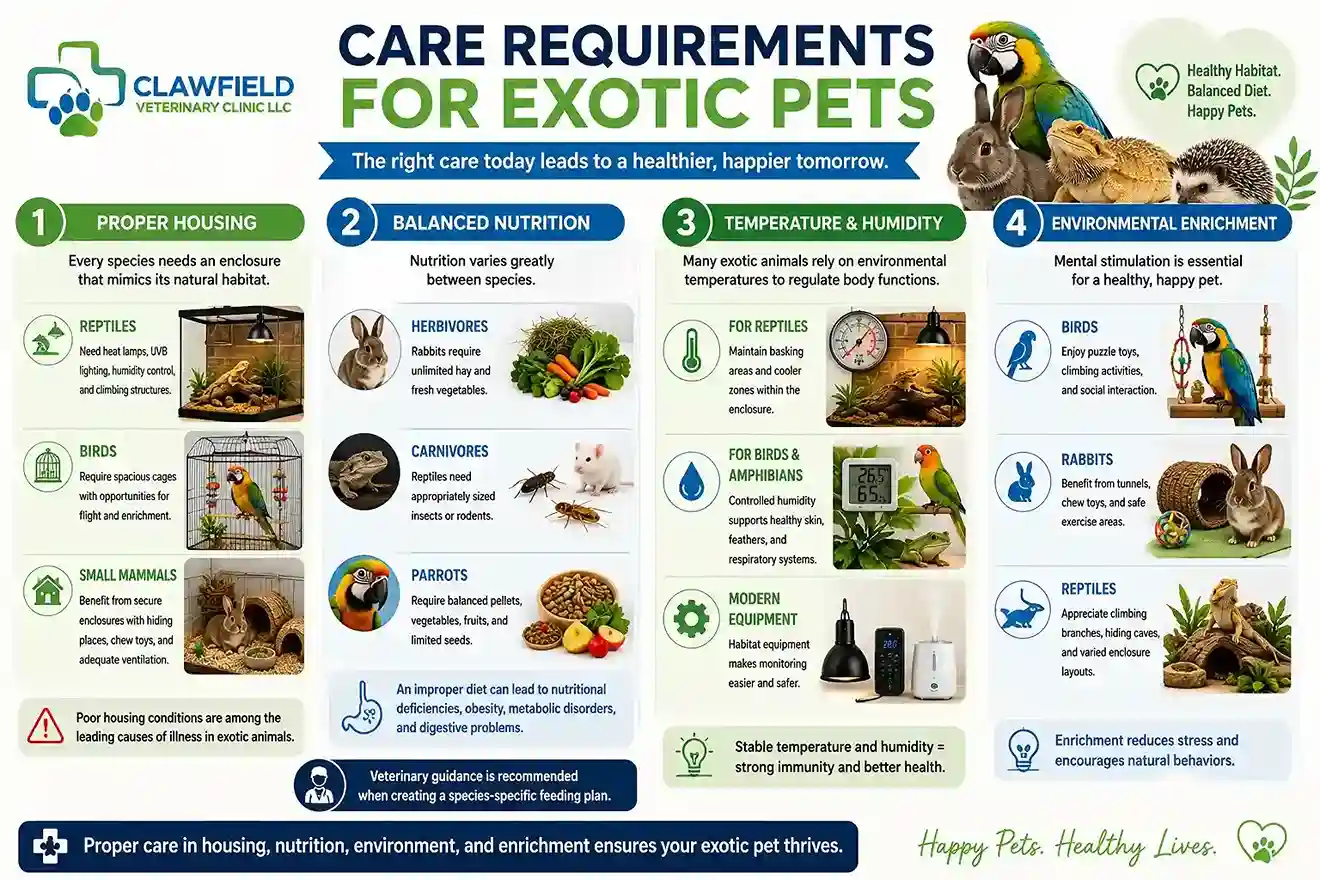
Proper Housing
Housing is one of the most critical aspects of exotic pet care. Every species requires an enclosure that mimics its natural habitat.
Reptiles often need heat lamps, UVB lighting, humidity control, and climbing structures. Birds require spacious cages with opportunities for flight and enrichment.
Small mammals benefit from secure enclosures with hiding places, chew toys, and adequate ventilation.
Poor housing conditions are among the leading causes of illness in exotic animals.
Balanced Nutrition
Nutrition varies greatly between species.
Herbivorous rabbits require unlimited hay and fresh vegetables.
Carnivorous reptiles need appropriately sized insects or rodents.
Parrots require balanced pellets, vegetables, fruits, and limited seeds.
Providing an improper diet can quickly lead to nutritional deficiencies, obesity, metabolic disorders, and digestive problems.
Veterinary guidance is recommended when creating a species-specific feeding plan.
Temperature and Humidity
Many exotic animals rely on environmental temperatures to regulate body functions.
Reptiles require carefully maintained basking areas and cooler zones within their enclosure.
Tropical birds and amphibians often need controlled humidity to maintain healthy skin, feathers, and respiratory systems.
Modern habitat equipment makes environmental monitoring much easier and safer.
Environmental Enrichment
Exotic pets need mental stimulation to remain healthy.
Birds enjoy puzzle toys, climbing activities, and social interaction.
Rabbits benefit from tunnels and safe exercise areas.
Reptiles appreciate climbing branches, hiding caves, and varied enclosure layouts.
Enrichment reduces stress and encourages natural behaviors.
Veterinary Care for Exotic Species
Exotic animals often hide signs of illness until disease becomes severe.
Routine health examinations allow veterinarians to detect early warning signs including:
- Weight loss
- Nutritional deficiencies
- Parasites
- Dental disease
- Respiratory infections
- Skin disorders
Preventive veterinary care significantly improves survival rates and quality of life.
Why Preventive Care Matters
Preventive medicine is just as important for exotic pets as it is for cats and dogs.
Regular health monitoring allows veterinarians to evaluate body condition, nutrition, hydration, organ function, and behavioral changes before serious illnesses develop.
Early diagnosis typically results in simpler treatment, lower medical costs, and better long-term outcomes.
Signs Your Exotic Pet Needs Veterinary Attention
Owners should seek veterinary care immediately if they notice unusual behavior.
Common warning signs include:
- Loss of appetite
- Difficulty breathing
- Weight loss
- Swelling
- Feather plucking
- Abnormal shedding
- Diarrhea
- Lethargy
- Eye discharge
- Difficulty moving
Prompt treatment greatly improves recovery chances.
Habitat Setup for Exotic Pets
Creating an appropriate habitat involves much more than purchasing a cage.
Owners should consider:
- Correct enclosure size
- Safe bedding materials
- Temperature regulation
- Humidity control
- Proper lighting
- Clean water
- Species-appropriate enrichment
- Regular cleaning schedules
An optimized environment reduces stress and promotes natural behavior.
Choosing an Exotic Animal Veterinarian
Not every veterinarian treats exotic animals.
When selecting a veterinary practice, consider experience with your specific species, diagnostic capabilities, emergency services, preventive care programs, and nutritional guidance.
A knowledgeable veterinarian becomes an essential partner throughout your pet’s life.
Expert Exotic Pet Care in Nad Al Sheba, Dubai
If you live in Nad Al Sheba, Meydan, Mohammed Bin Rashid City (MBR City), Business Bay, Downtown Dubai, Al Quoz, Ras Al Khor, or Dubai Silicon Oasis, having access to experienced exotic pet veterinary care is essential. Whether your companion is a rabbit, parrot, reptile, hedgehog, or another unique species, choosing a nearby veterinary team makes routine wellness visits, preventive care, and emergency treatment much more convenient. A trusted local veterinary clinic can also provide species-specific nutritional advice, habitat recommendations, health screenings, and ongoing medical support, helping exotic pet owners throughout central Dubai keep their companions healthy and thriving.
Exotic Pet Care Comparison Table
| Pet Type | Main Diet | Housing Needs | Veterinary Visits | Difficulty Level |
|---|---|---|---|---|
| Rabbit | Hay, vegetables | Spacious enclosure | Every 6–12 months | Moderate |
| Parrot | Pellets, fruits, vegetables | Large cage with enrichment | Annual or as needed | Moderate |
| Bearded Dragon | Insects, vegetables | Heated terrarium with UVB | Annual wellness exam | Moderate |
| Ball Python | Frozen-thawed rodents | Secure heated enclosure | Annual health check | Moderate |
| Hedgehog | Specialized diet | Warm enclosure | Annual exam | Moderate |
| Tortoise | Grasses, leafy greens | Outdoor/indoor habitat | Regular wellness visits | Moderate to High |
Responsible Exotic Pet Ownership
Responsible ownership begins with education. Every owner should understand the species’ natural behaviors, dietary requirements, expected lifespan, and healthcare needs before bringing an animal home.
Providing appropriate housing, regular veterinary care, environmental enrichment, and proper nutrition allows exotic pets to thrive in captivity.
Ethical ownership also means respecting wildlife conservation laws and avoiding illegally traded animals.